The regions of Saudi Arabia
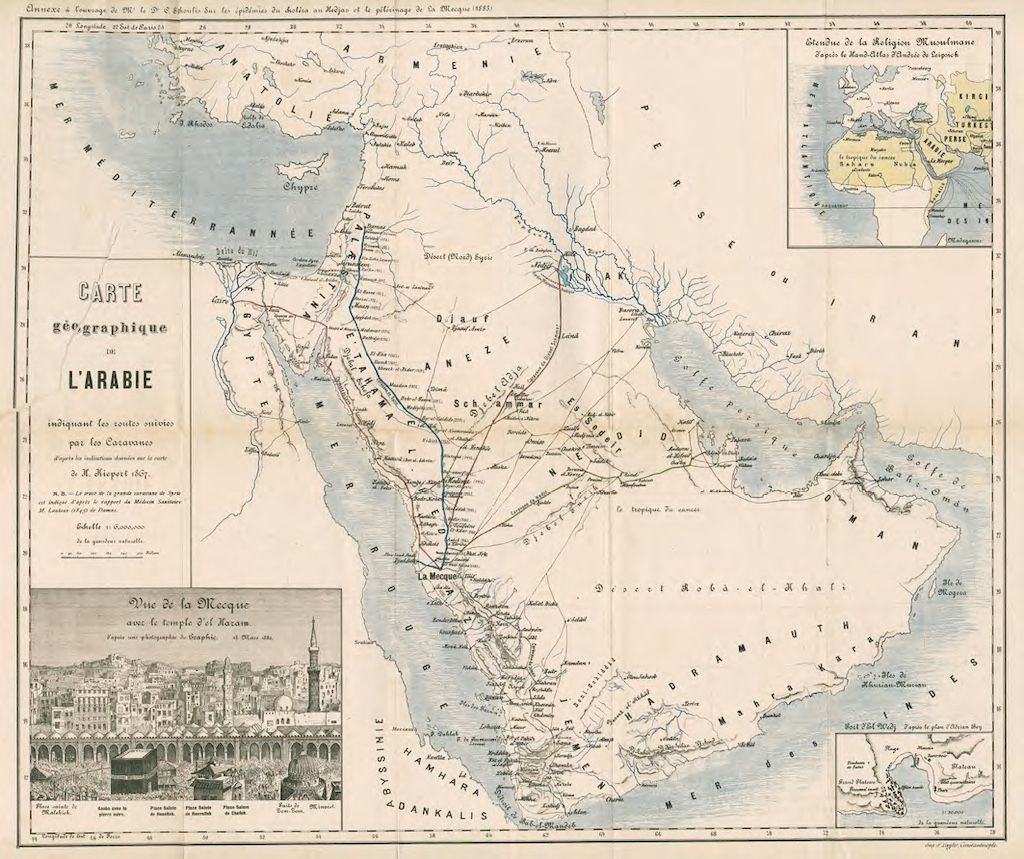
Saudi Arabia, a country rich in cultural heritage and geographical diversity, is divided into 13 administrative regions known as provinces (mintaqah). These provinces are grouped into five main geographical regions: Northern, Southern, Eastern, Western, and Central. Each province has its own unique characteristics in terms of geography, climate, culture, and economic activities.
Overview of Traditional Costumes and Historical Context
Central Region: Riyadh’s traditional attire reflects its status as the political and administrative heart of Saudi Arabia, with a blend of modern and traditional elements.
Eastern Region: The Eastern Province’s costumes signify its economic prosperity and historical trade connections, featuring luxurious fabrics and detailed embroidery.
Western Region: Makkah and Medina’s attire emphasize modesty and religious significance, reflecting their roles as spiritual centres of Islam.
Northern Region: Traditional clothing in the northern provinces combines practical desert wear with ornamental designs, influenced by historical trade routes and cultural heritage.
Southern Region: Southern provinces showcase vibrant and colourful costumes, reflecting their rich cultural traditions, diverse landscapes, and historical trade connections.
These traditional costumes not only highlight the cultural diversity across Saudi Arabia’s provinces but also connect each region to its historical roots and heritage.
Recent Collection Articles
Explore & discover the splendour of our collection
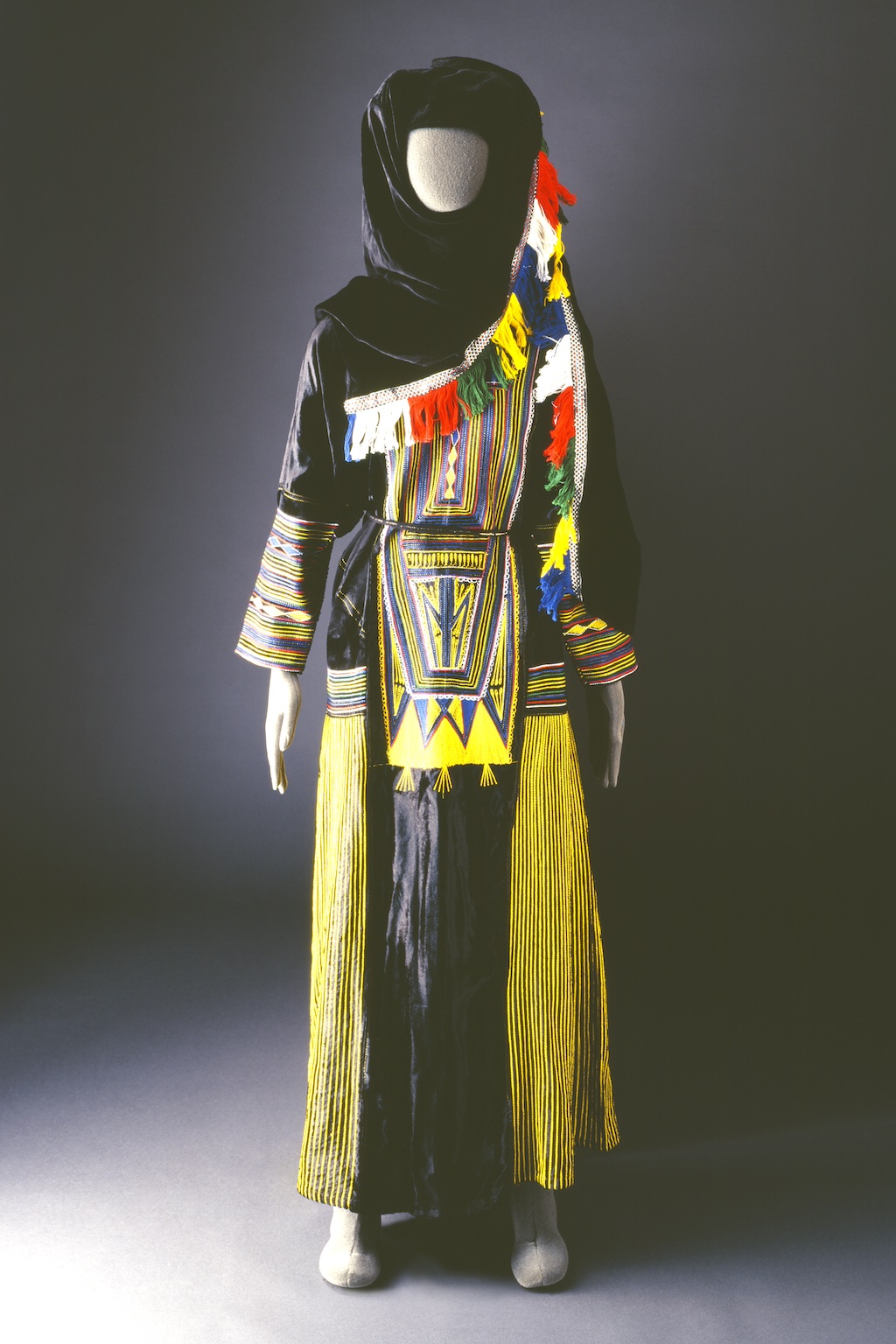
Asir velvet thobe
Asir, Southern Region Asir velvet thobe with front embroidered panels which recall the motifs of the hand painted decorations on the interiors of the traditional Asir homes. Asir, like the highlands of southern Hijaz, is traditionally a region of settled tribespeople. Peaks rise to 3,000 metres, and terraced farming is[...]
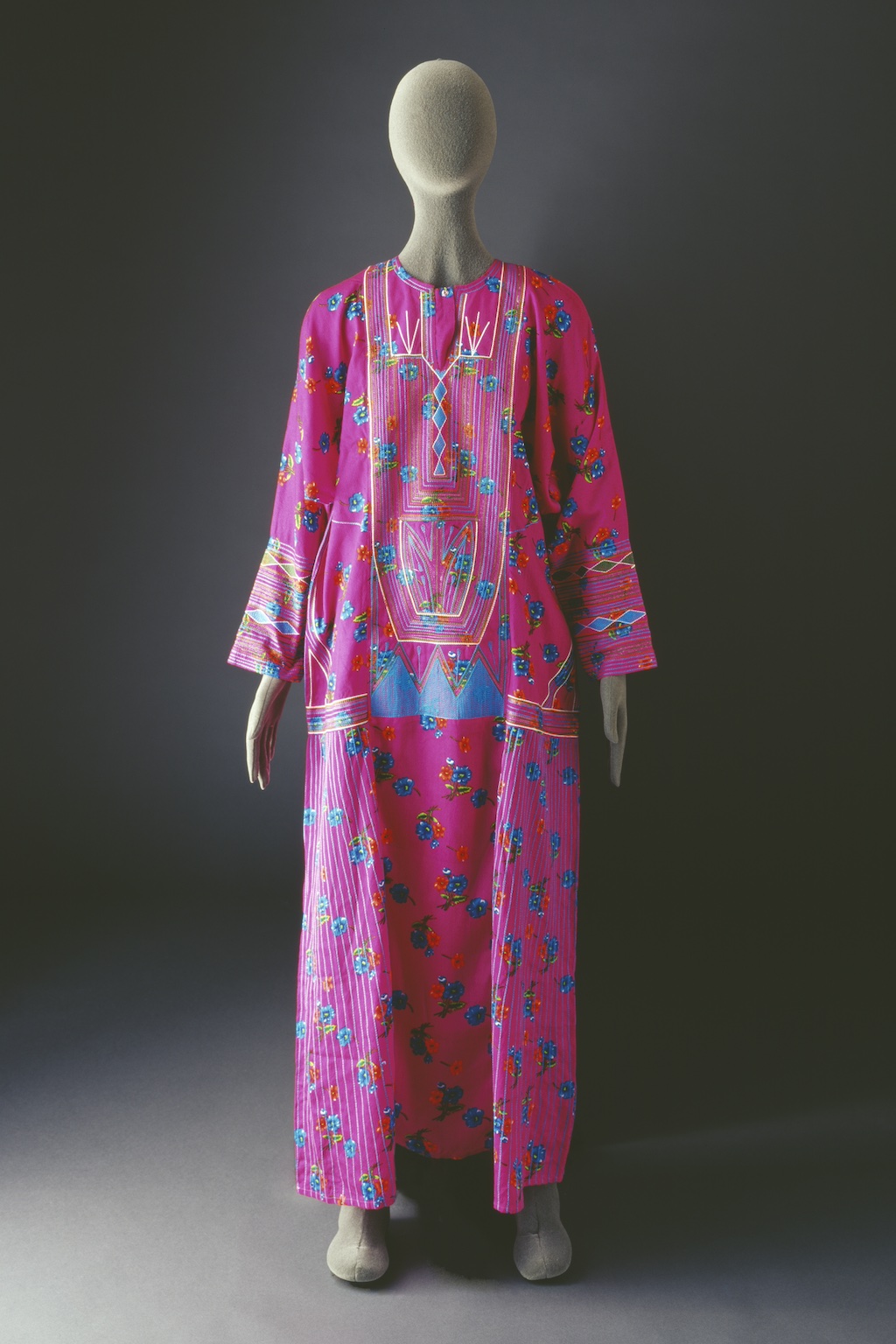
Asir floral printed thobe
Asir, Southern Region Asir, like the highlands of southern Hijaz, is traditionally a region of settled tribespeople. Peaks rise to 3,000 metres, and terraced farming is fed by both winter and summer rains. Buildings are tall, of both stone and mud. In Asir sarongs are worn beneath dresses, to conceal[...]
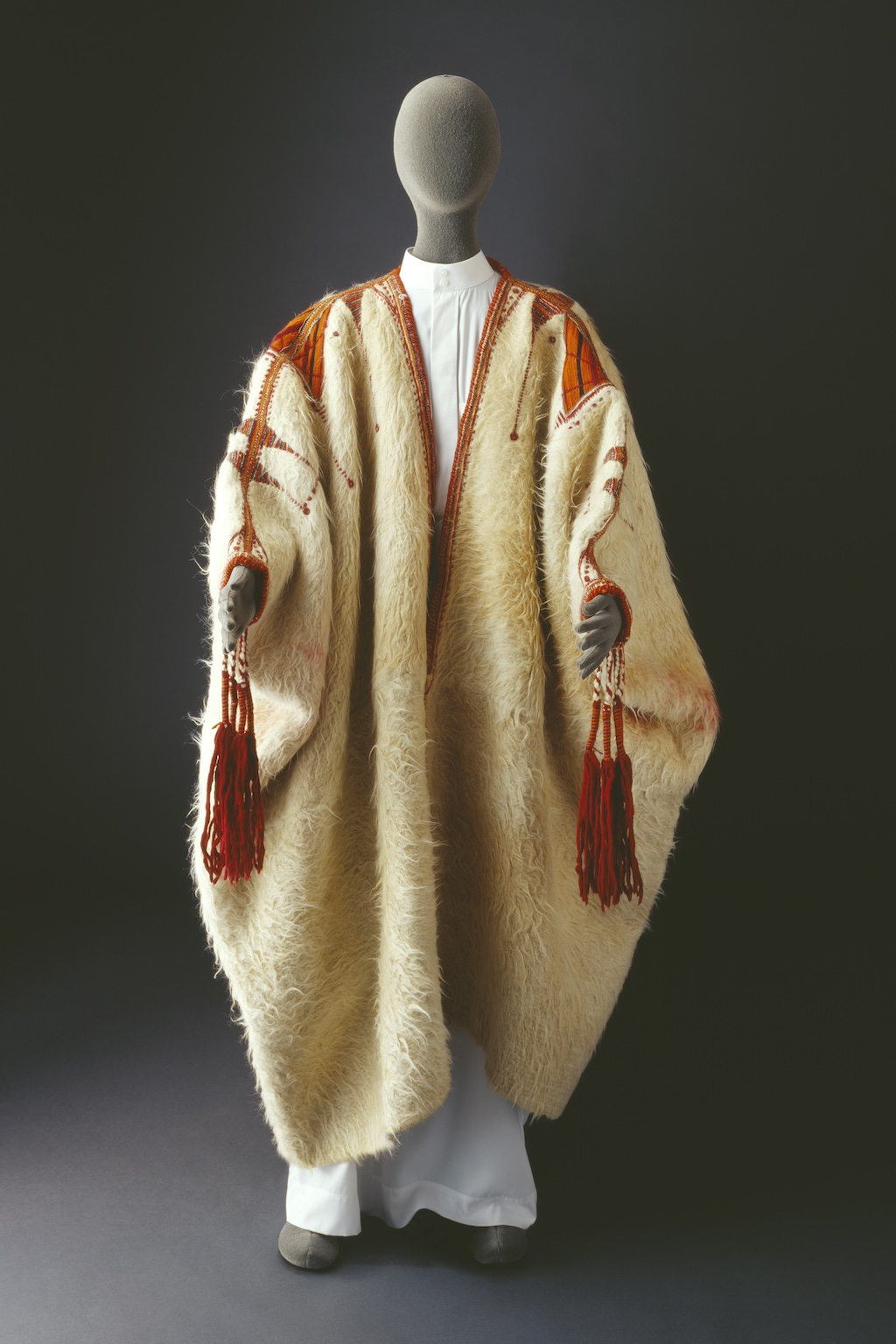
Al Baha man’s bidi aba
Al Baha, Southern Region The highland plateau atop the mountain escarpment is green and fertile. It is a land of terraced farms, juniper forests and rural buildings of both stone and mud. In these southern regions the tailoring was done by men. Al Baha man's bidi aba (cloak) made of[...]
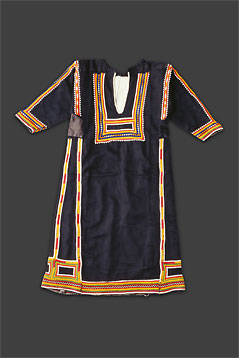
Bani Malik little girl’s thobe
The Bani Malik Tribe Bani Malik little girl's thobe in black cotton fabric cut and embroidered in the same style as for an adult. Glass beads are interspersed along the embroidered panels. Neighbouring Bani Sa‘d to the south is the Bani Malik tribe. The decorative stonework of their architecture is[...]
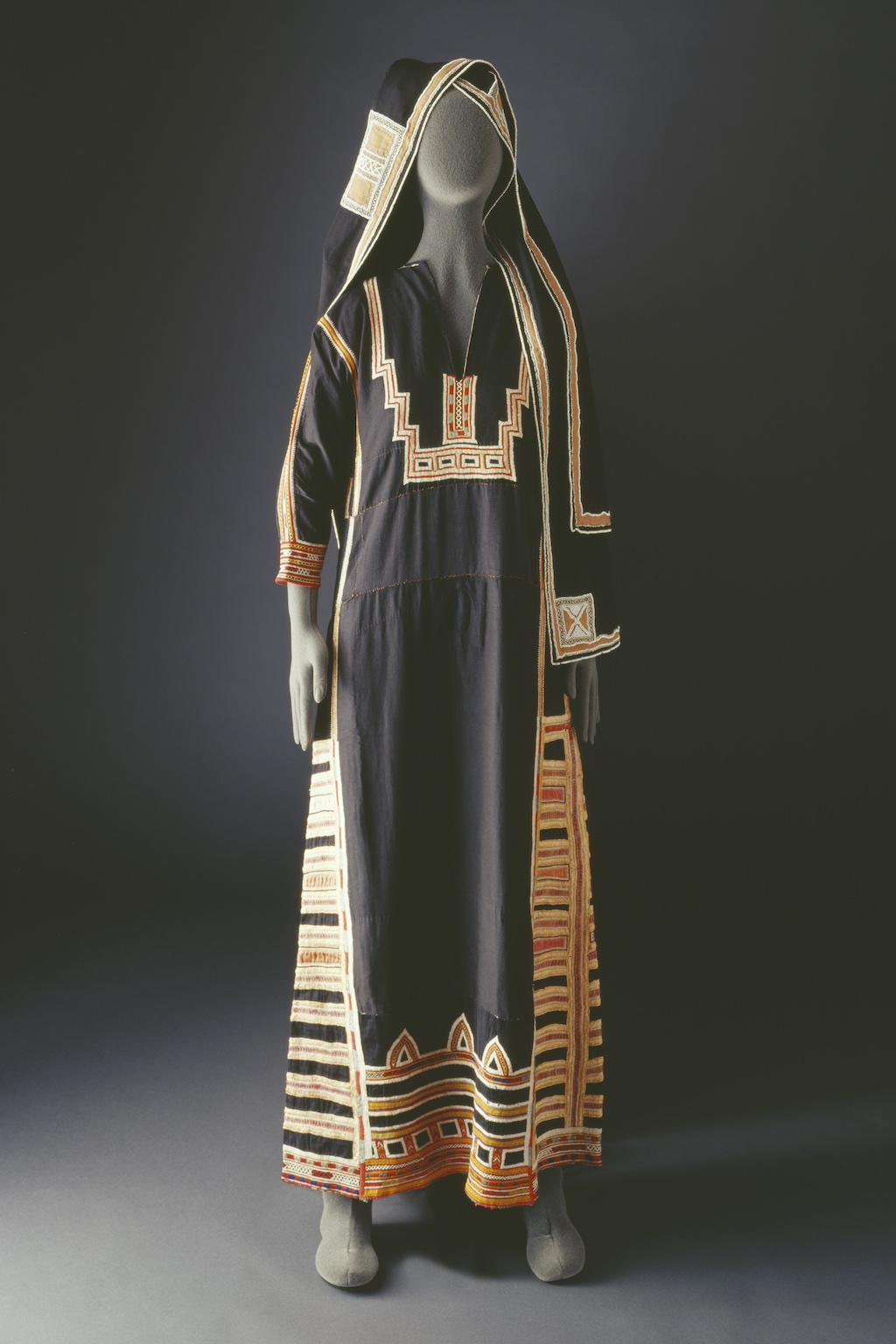
Banik Malik thobe with embroidered side and front panels
The Bani Malik tribe Bani Malik thobe with embroidered side and front panels. The short sleeves are to allow for silver bracelets. The head veil is decorated with glass beads. Neighbouring Bani Sa‘d to the south is the Bani Malik tribe. The decorative stonework of their architecture is typical of[...]