Tribes of Saudi Arabia
Traditional costumes reflect the rich cultural identities of Saudi Arabia’s tribes, showcasing their unique heritage, craftsmanship, and regional diversity
Tribes in Saudi Arabia maintain a strong cultural identity through traditional practices, social structures, and linguistic heritage. They play a vital role in the social and political fabric of the country. Tribal affiliations often influence social interactions, marriage, and local governance. Additionally, the Bedouin lifestyle, characterized by nomadic or semi-nomadic existence, is a significant aspect of many tribes’ heritage, though modernisation has altered some traditional ways of life.
In contemporary Saudi Arabia, while the influence of tribes has diminished in some areas due to urbanisation and modernisation, tribal affiliations still hold social and political importance. Tribal customs and traditions continue to be celebrated, particularly in rural areas, and play a role in the cultural preservation of Saudi heritage.
Organising the website into logical sections has also been a challenge. In some instances, costumes had to be grouped by tribe and in others by geographical location. The geographical coverage is determined by the scope of The Mansoojat Foundation collection. As the costumes have been collected from numerous donations and field trips, their geographical distribution is uneven – some regions of the Kingdom are sparsely represented, while others are more strongly represented.
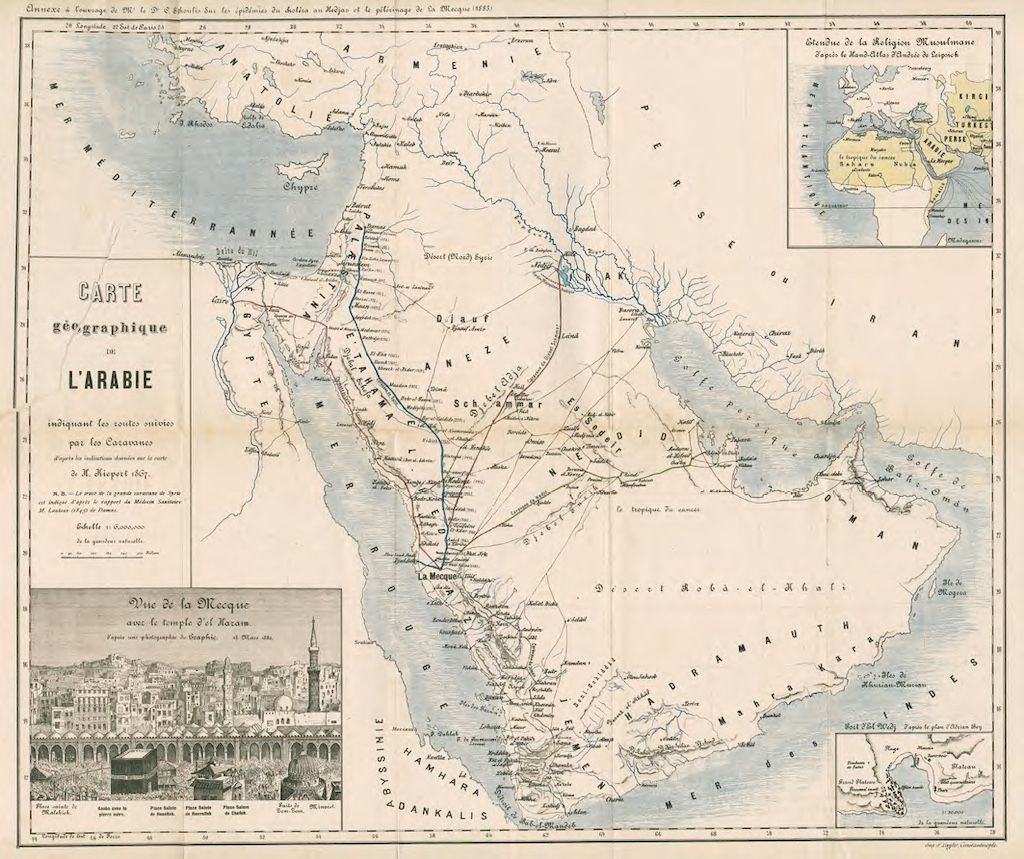
For ease of use, we have allocated the tribes to the five main territories. However, with the tribes of Saudi Arabia, it should be noted that the boundaries of a territory are an artificial constraint on tribes’ movements.
List of tribes in Saudi Arabia, categorized by their primary regions:
Northern Region Tribes
- Shammar – Predominantly found in the Ha’il and northern regions.
- Al-Rashidi – Mainly in Ha’il and surrounding areas.
- Bani Atiyah – Located in the Tabuk region.
- Al-Jawf tribes – Various tribes in the Al-Jawf province, including Al-Sharari.
Southern Region Tribes
- Qahtan – Primarily in the Asir, Najran, and Jizan regions.
- Banu Yam – Centered in Najran.
- Al-Murrah – Found in the southern and eastern parts of the country.
- Banu Amr – Located in the Asir region.
- Ghamid – Situated in the Al-Bahah region.
- Zahran – Found in Al-Bahah and surrounding areas.
- Hawsawi – Present in the southern regions and known for their distinct culture.
- Al-Harbi – Also found in the southern areas, particularly in mountainous regions.
Eastern Region Tribes
- Bani Khalid – Predominantly in the Eastern Province (Ash-Sharqiyah).
- Al-Murrah – Also found in the eastern part of the country.
- Ajman – Located in the Eastern Province.
- Al-Dawasir – Found in the Eastern Province and parts of the south.
Western Region Tribes
- Harb – One of the largest tribes, found in the Makkah and Medina regions.
- Juhaina – Located in the Medina region.
- Banu Hilal – Present in the Makkah and surrounding areas.
- Thaqeef – Found in the Taif region within the Makkah Province.
- Hudhayl – Located in the western region, particularly near Makkah.
Central Region Tribes
- Al-Saud – The royal family and part of the larger Anizah tribe, primarily in Riyadh.
- Anizah – Found in the central region, including Riyadh and Al-Qassim.
- Mutayr – Located in the central and northern areas.
- Subay’i (Subaie) – Present in the central region, particularly around Riyadh.
- Utaybah (Otaibah) – A powerful tribe in the central region, including Riyadh.
- Al-Dawasir – Also found in the central region, including Wadi Al-Dawasir.
- Al-Mujamma’ah – Tribes within the Al-Qassim region.
Notable Tribes Across Multiple Regions
- Qahtan – Spanning southern and central regions.
- Shammar – Found in both northern and central regions.
- Banu Khalid – Present in both eastern and parts of the central regions.
- Al-Murrah – Located in both eastern and southern parts.
- Mutayr – Found in both central and northern areas.
These tribes have rich cultural heritages and have played significant roles in the history and development of Saudi Arabia. Each tribe has its own distinct traditions, social structures, and contributions to the country’s cultural mosaic.
Recent Collection Articles
Explore & discover the splendour of our collection
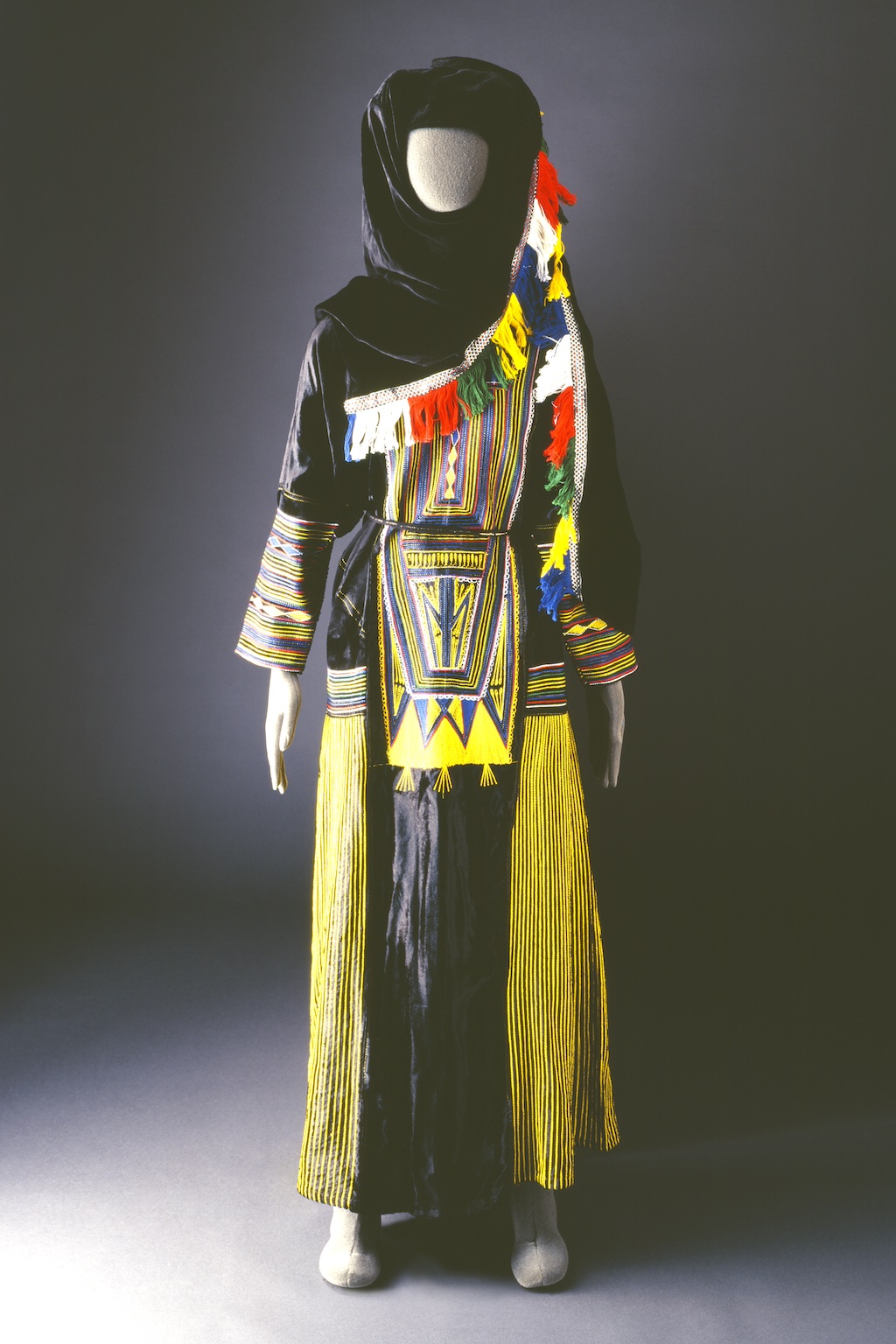
Asir velvet thobe
Asir, Southern Region Asir velvet thobe with front embroidered panels which recall the motifs of the hand painted decorations on the interiors of the traditional Asir homes. Asir, like the highlands of southern Hijaz, is traditionally a region of settled tribespeople. Peaks rise to 3,000 metres, and terraced farming is[...]
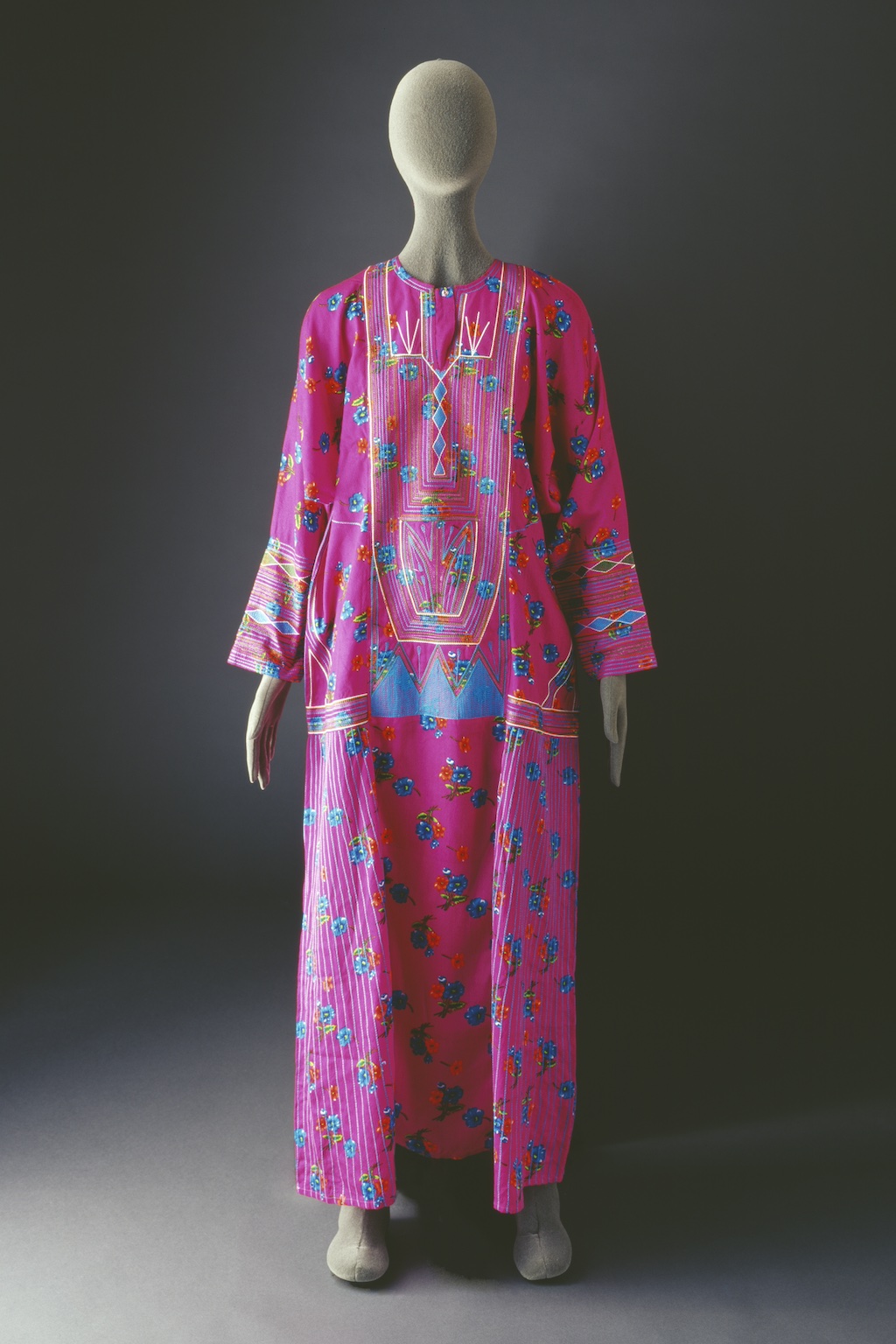
Asir floral printed thobe
Asir, Southern Region Asir, like the highlands of southern Hijaz, is traditionally a region of settled tribespeople. Peaks rise to 3,000 metres, and terraced farming is fed by both winter and summer rains. Buildings are tall, of both stone and mud. In Asir sarongs are worn beneath dresses, to conceal[...]
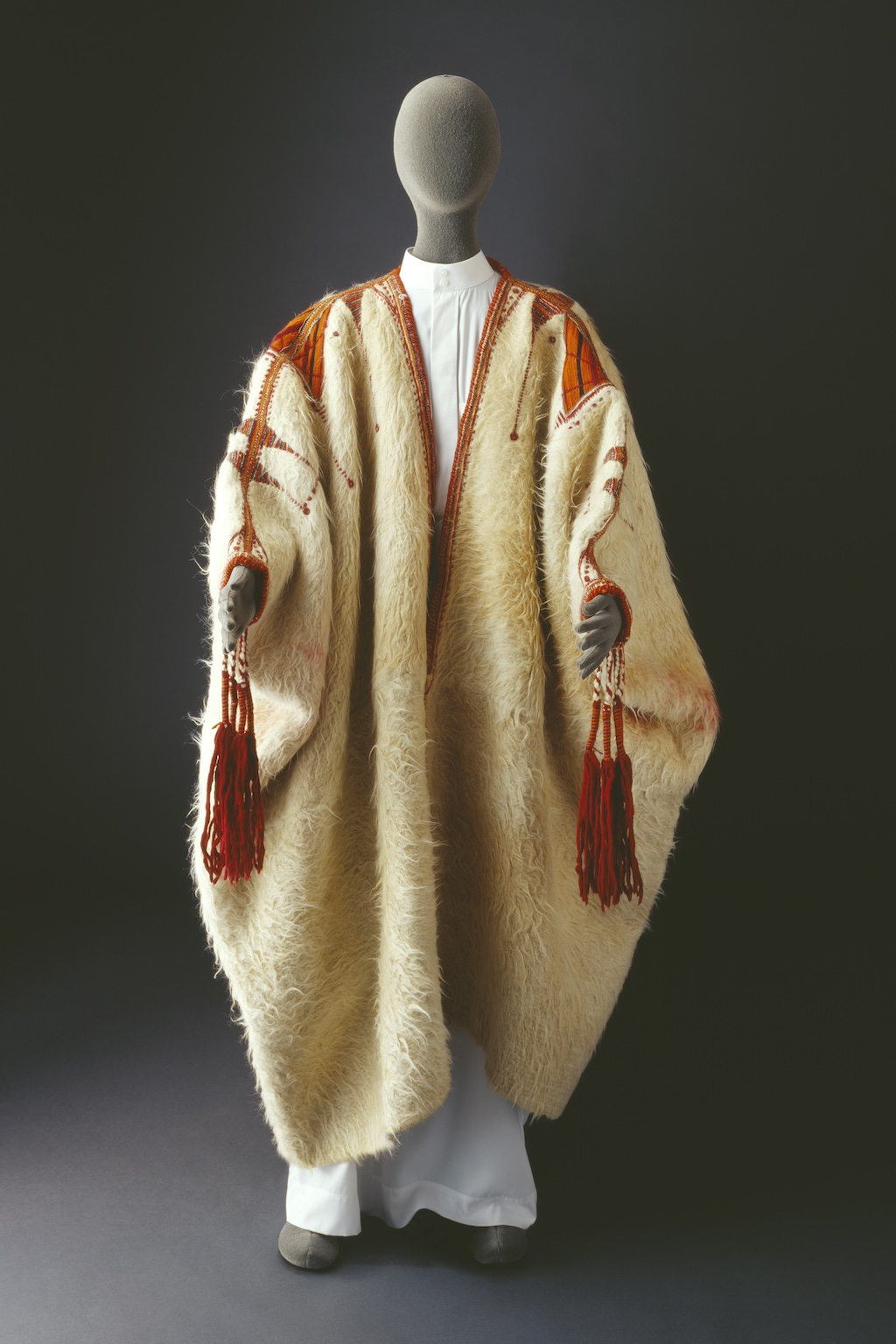
Al Baha man’s bidi aba
Al Baha, Southern Region The highland plateau atop the mountain escarpment is green and fertile. It is a land of terraced farms, juniper forests and rural buildings of both stone and mud. In these southern regions the tailoring was done by men. Al Baha man's bidi aba (cloak) made of[...]
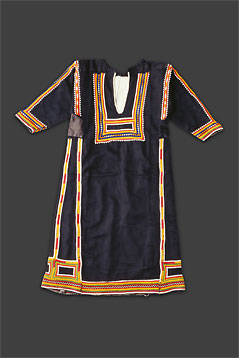
Bani Malik little girl’s thobe
The Bani Malik Tribe Bani Malik little girl's thobe in black cotton fabric cut and embroidered in the same style as for an adult. Glass beads are interspersed along the embroidered panels. Neighbouring Bani Sa‘d to the south is the Bani Malik tribe. The decorative stonework of their architecture is[...]
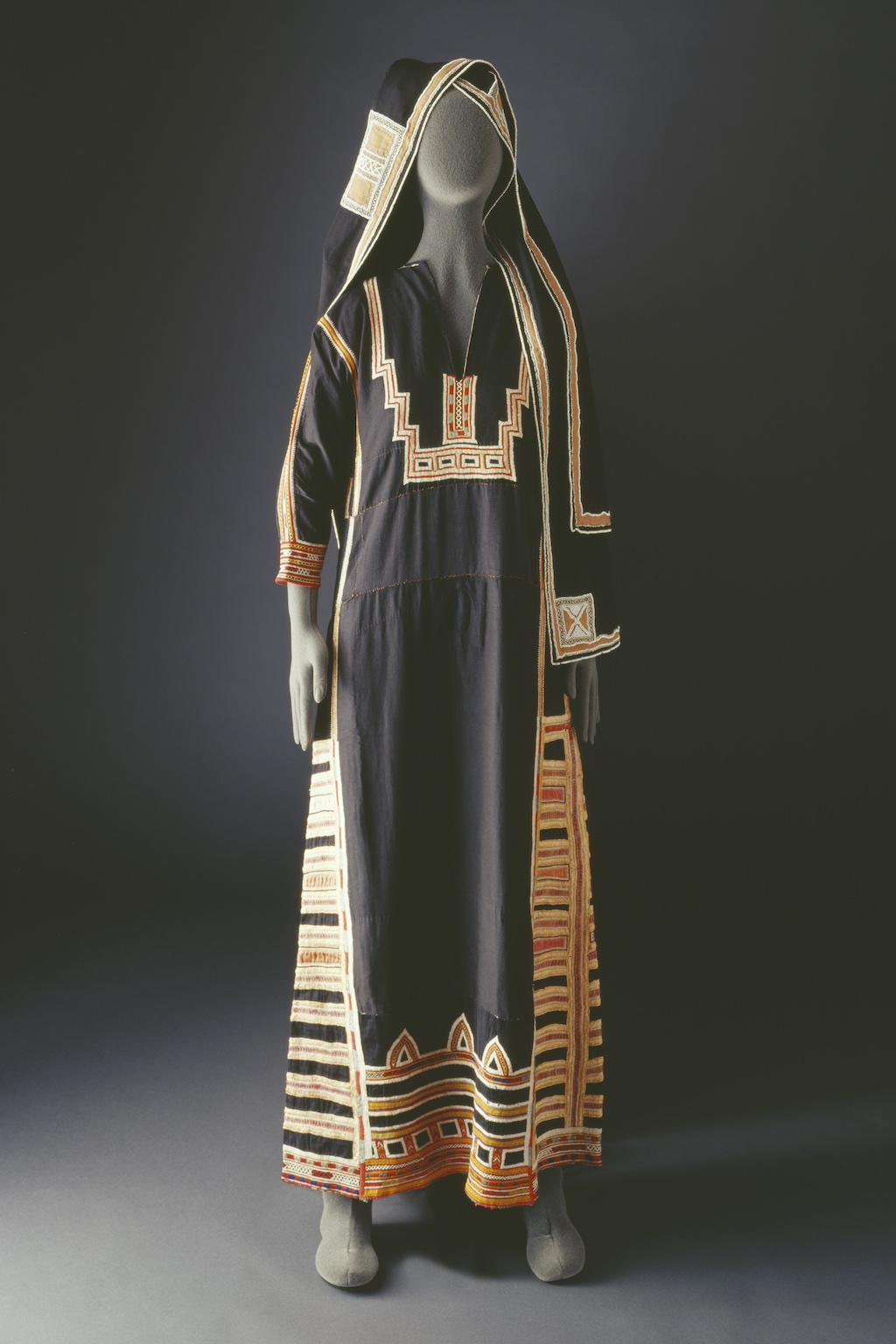
Banik Malik thobe with embroidered side and front panels
The Bani Malik tribe Bani Malik thobe with embroidered side and front panels. The short sleeves are to allow for silver bracelets. The head veil is decorated with glass beads. Neighbouring Bani Sa‘d to the south is the Bani Malik tribe. The decorative stonework of their architecture is typical of[...]
Recent Articles
Ali Ibrahim Mohammed Maghawi
Ali Ibrahim Mohammed Maghawi is a writer and researcher on cultural heritage in southern Saudi Arabia. He is an active member, mentor and guide with the Rijal Alma Museum in ‘Asir. Maghawi has published on various cultural and literary topics and has a long-standing interest in tribal traditions of ‘Asir.[...]
Abdul Aziz bin Mansi Sa’id al-‘Omari
Abdul Aziz bin Mansi Sa'id al-'Omari is the director of the Antiquities and Ethnographic museum Department with the Saudi Commission for Tourism and National Heritage. Previously, he was the head of regional museums in Al-Ula, Najran and Taif. As an archaeologist with the National Museum in Riyadh, al-'Omari has worked[...]
Soraya Altorki
Soraya Altorki is a professor of anthropology at The American University in Cairo. She holds a PhD from the University of California, Berkeley and has taught at universities across the US and in Saudi Arabia. Her research focuses on women's issues in the Arab world and she is a founding[...]